Synology Presto Giải pháp truyền tập tin tức thì
Presto File Server
Cung cấp khả năng truyền tốc độ cao tức thì và tự động giữa các điểm cuối và máy chủ qua mạng WAN .

Công nghệ SITA
Synology Internet Transfer Accelerator (SITA) là một công nghệ tăng tốc truyền được phát triển bởi Synology. Nó cải thiện hiệu suất truyền tệp, khắc phục các kết nối có độ trễ cao và không ổn định khi truyền tệp qua khoảng cách xa.
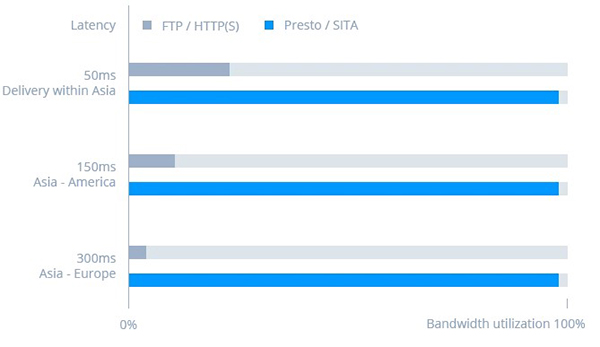
Giải phóng tiềm năng băng thông của bạn
Tình trạng trì trệ do độ trễ mạng gây ra khiến băng thông khả dụng không hoạt động. Bằng cách cải thiện cơ chế đảm bảo phân phối gói được sử dụng bởi FTP và HTTP, SITA giảm thiểu tình trạng trì trệ và tận dụng tối đa băng thông có sẵn.
Tốc độ truyền có thể định cấu hình
Với SITA, người dùng có thể định cấu hình băng thông tối thiểu và tối đa theo nhu cầu của mình, dự đoán và kiểm soát tốt hơn thời gian truyền tệp cần thiết cho các tác vụ khác nhau.
Truyền dữ liệu số với tốc độ cao
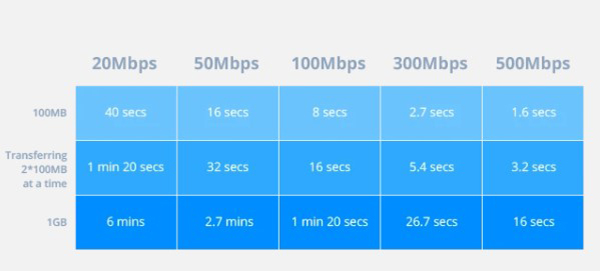
Tăng tốc quy trình công việc từ xa với chuyển tập tin nhanh hơn
Thời gian cần thiết để truyền tệp giữa một công ty và các chi nhánh ở nước ngoài thông qua FTP hoặc HTTP có thể làm chậm trễ các dự án và tác động tiêu cực đến hiệu quả. Với SITA, thời gian chuyển giao được rút ngắn đáng kể, cải thiện tính liên tục của hoạt động kinh doanh.
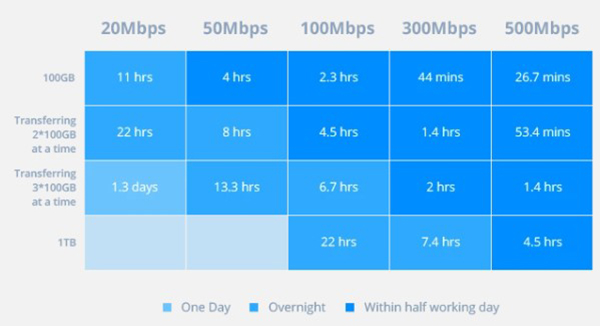
 Dễ dàng trao đổi lượng dữ liệu khổng lồ
Việc gửi các tệp lớn ra nước ngoài qua FTP hoặc HTTP có thể mất vài ngày. Vận chuyển dữ liệu trên ổ cứng có thể nhanh hơn, nhưng có thêm chi phí và rủi ro mất dữ liệu. Presto File Server cung cấp dữ liệu với tốc độ nhanh hơn nhiều trong môi trường mạng hiện tại, mang lại lợi ích cho các ngành thường xuyên truyền dữ liệu lớn, chẳng hạn như đa phương tiện, giải trí, kỹ thuật, sản xuất, chăm sóc sức khỏe, v.v.
Kiểm tra hiệu suất về tốc độ truyền
Mã hóa thông tin xác thực và xác minh 2 bước
Thông tin đăng nhập được bảo mật trong một kênh được mã hóa TLS/TCP chuyên dụng. Xác minh 2 bước bảo vệ thông tin đăng nhập của bạn khỏi các cuộc tấn công của bên thứ ba độc hại và vi-rút.
Mã hóa chuyển tập tin
Máy khách để bàn của Presto hỗ trợ mã hóa AES-128, đảm bảo dữ liệu số lượng lớn vẫn được bảo mật cao khi chúng chuyển.
Xác minh SSL
Synology Presto Client bao gồm xác minh SSL để ngăn người dùng kết nối với các trang web lừa đảo bằng chứng chỉ SSL không đáng tin cậy, giữ kết nối an toàn và bảo vệ dữ liệu nhạy cảm.
Ứng dụng trực quan truyền ngay lập tức và tự động
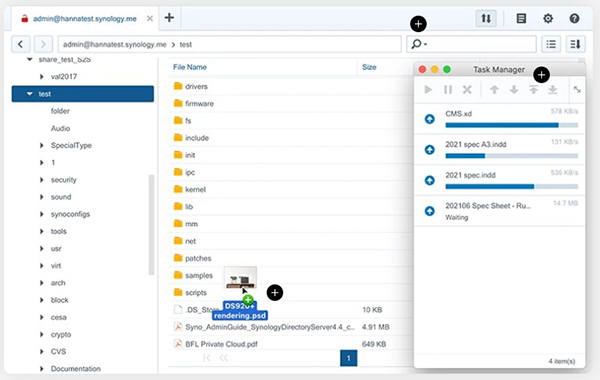
Synology Presto Client cho phép bạn nhanh chóng trao đổi dữ liệu trên Windows, macOS và Linux. Bạn cũng có thể sử dụng Presto thông qua giao diện dòng lệnh (CLI) với bất kỳ tập lệnh tùy chỉnh nào phù hợp nhất với tình huống sử dụng của bạn.
Truyền tệp từ NAS sang NAS nhanh chóng, tự động
How Betzoid Examines Global Football Betting Regulations and History
Football betting has evolved from informal wagers among spectators to a sophisticated global industry worth billions of dollars annually. Understanding how this transformation occurred requires examining the intricate web of regulations, cultural attitudes, and historical developments that have shaped betting practices across different continents. The regulatory landscape governing football betting varies dramatically between jurisdictions, reflecting diverse legal traditions, social values, and economic priorities. Analyzing these differences provides crucial insights into how nations balance consumer protection, revenue generation, and the integrity of sport.
The Historical Evolution of Football Betting Regulations
The formalization of football betting regulations began in earnest during the mid-twentieth century, though wagering on football matches dates back to the sport’s earliest days. In the United Kingdom, the Betting and Gaming Act of 1960 marked a pivotal moment, legalizing betting shops and establishing a framework that would influence regulatory approaches worldwide. This legislation emerged after decades of illegal bookmaking operations and recognized that prohibition had proven ineffective in curbing gambling activities.
Continental Europe followed different trajectories based on distinct legal philosophies. Many countries implemented state monopoly systems, reasoning that centralized control would better protect consumers and prevent criminal infiltration. France established the Française des Jeux in 1933, while similar entities emerged across Scandinavia and Southern Europe. These monopolies operated under the premise that gambling required strict governmental oversight rather than competitive market forces.
The Asian betting landscape developed along markedly different lines, with many jurisdictions maintaining strict prohibitions even as underground markets flourished. Hong Kong represented a notable exception, establishing the Hong Kong Jockey Club as a legal betting operator in 1884, which later expanded to include football betting in 1974. This model demonstrated how regulated betting could coexist with traditional values when properly administered and when revenues supported social welfare programs.
Latin American countries generally adopted restrictive approaches until recent decades, with most nations prohibiting or severely limiting sports betting. However, economic pressures and the growth of unregulated offshore operators have prompted regulatory reconsideration across the region. Brazil’s gradual movement toward legalization exemplifies this shift, as policymakers recognize the potential tax revenues and the need to protect consumers participating in existing gray markets.
Contemporary Regulatory Frameworks and Comparative Analysis
Modern football betting regulation reflects three primary models: licensing systems, state monopolies, and prohibition with varying enforcement levels. The United Kingdom’s licensing approach, administered by the Gambling Commission since 2005, permits multiple operators to compete under strict regulatory standards covering advertising, consumer protection, and responsible gambling measures. This framework emphasizes market competition while maintaining robust oversight mechanisms to ensure operator accountability.
The European Union’s influence on betting regulation has been substantial, particularly through court decisions affirming the principle of free movement of services. The landmark Gambelli case in 2003 established that member states could restrict gambling services only if restrictions were applied consistently and genuinely aimed at protecting consumers or preventing fraud. These rulings have pressured monopolistic systems to justify their exclusivity or open markets to licensed competitors from other EU nations. Platforms like https://betzoid.org/ have emerged to help bettors navigate this complex regulatory environment by providing comprehensive information about legal betting options across different jurisdictions and examining how various regulatory frameworks impact the betting experience.
The United States experienced a seismic regulatory shift with the 2018 Supreme Court decision in Murphy v. NCAA, which struck down the federal prohibition on state-authorized sports betting. This ruling unleashed a state-by-state legalization wave, with over thirty states now permitting sports wagering in some form. Each state has crafted unique regulatory structures, creating a patchwork of licensing requirements, tax rates, and operational restrictions. New Jersey’s competitive market contrasts sharply with states imposing higher barriers to entry, providing natural experiments in regulatory design.
African nations present diverse regulatory environments, from South Africa’s relatively mature licensing system to countries maintaining strict prohibitions. The continent’s regulatory development has been complicated by limited administrative capacity, concerns about gambling’s social impact, and the prevalence of informal betting operations. Kenya’s 2019 betting tax controversy, which saw the government impose substantial levies leading to operator withdrawals, illustrates the delicate balance between revenue generation and maintaining a functional legal market.
Regulatory Challenges in the Digital Age
The internet has fundamentally disrupted traditional regulatory frameworks by enabling cross-border betting operations that challenge territorial jurisdiction. Offshore operators based in loosely regulated jurisdictions can offer services to customers worldwide, creating enforcement difficulties for countries seeking to maintain strict controls. This phenomenon has forced regulators to develop new strategies, including payment blocking, internet service provider restrictions, and international cooperation agreements.
Match-fixing represents perhaps the most serious integrity threat confronting football betting regulators. The interconnected nature of global betting markets means suspicious wagering patterns in one jurisdiction may indicate corruption occurring thousands of miles away. Organizations like the International Betting Integrity Association facilitate information sharing between bookmakers and sports authorities, creating early warning systems for potential manipulation. Regulatory frameworks increasingly mandate operator participation in such monitoring systems as a licensing condition.
Responsible gambling provisions have become central to modern regulatory frameworks as research has illuminated gambling-related harm. Mandatory self-exclusion programs, deposit limits, and advertising restrictions reflect growing recognition that operators must actively prevent problem gambling rather than simply providing warnings. The UK’s recent restrictions on credit card gambling and whistle-to-whistle advertising bans during televised matches exemplify this evolution toward more protective regulatory postures.
Data protection and consumer privacy have emerged as critical regulatory concerns as operators collect extensive information about betting patterns and personal details. The European Union’s General Data Protection Regulation has established stringent requirements for data handling that extend beyond European operators to any entity serving EU customers. These provisions intersect with anti-money laundering obligations requiring customer verification, creating tension between privacy rights and regulatory compliance.
Taxation approaches vary enormously across jurisdictions, from gross gaming revenue models to turnover taxes, point-of-consumption levies, and player winnings taxes. These differences significantly impact operator profitability and market structure. France’s relatively high tax burden has been criticized for driving bettors toward unlicensed operators, while the UK’s point-of-consumption tax ensures all operators serving British customers contribute to public revenues regardless of where they are based. Finding the optimal tax rate that maximizes revenue without encouraging black market activity remains an ongoing challenge for policymakers.
Understanding the historical development and contemporary diversity of football betting regulations reveals how different societies have grappled with balancing individual freedom, consumer protection, sporting integrity, and economic interests. The regulatory approaches that have emerged reflect distinct legal traditions, cultural attitudes toward gambling, and varying assessments of the state’s proper role in controlling recreational activities. As technology continues to evolve and betting markets become increasingly globalized, regulatory frameworks must adapt to address emerging challenges while learning from the successes and failures of different jurisdictional approaches. The ongoing dialogue between regulators, operators, sports authorities, and advocacy groups will shape how football betting is governed in coming decades, determining whether this industry develops as a well-regulated entertainment sector or remains plagued by the problems that have historically accompanied gambling activities.
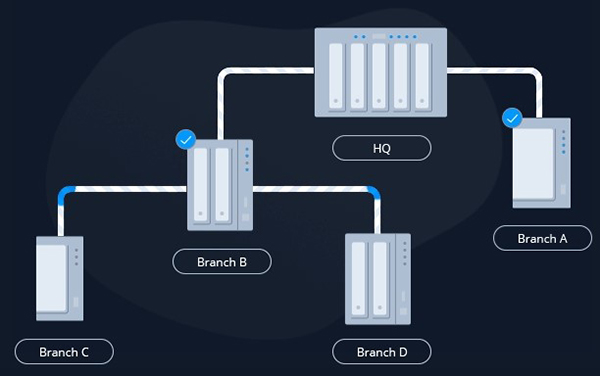
Việc chuyển các tệp lớn giữa nhiều trang web có thể mất nhiều thời gian. Lên lịch truyền tốc độ cao trên nhiều trang web với Synology Presto’s Site Express. Nó tự động phân phối tệp bằng cách kích hoạt chuyển tệp từ NAS này sang NAS khác, Giao diện trực quan cho phép bạn xem nhanh trạng thái truyền dữ liệu.
Quản lý tài nguyên linh hoạt
Synology Presto Client phục vụ như một giải pháp tối ưu để trao đổi tệp giữa PC của bạn và NAS Synology.
Điều phối và giám sát tài nguyên
Mức độ ưu tiên của các tác vụ chuyển giao có thể được điều chỉnh trong Trình quản lý tác vụ. Quản trị viên có thể theo dõi các sự kiện của các tài khoản khác nhau trên các máy chủ khác nhau thông qua nhật ký hoạt động. Quản trị viên cũng có thể đặt giới hạn về số lần truyền tệp đồng thời để đảm bảo băng thông được sử dụng đầy đủ cho các tác vụ ưu tiên.
Kiểm soát băng thông linh hoạt
Băng thông có thể được điều chỉnh trực tiếp trên Synology Presto Client tùy theo nhu cầu tại chỗ. Đặt ngưỡng băng thông tối đa và tối thiểu để truyền tệp cho phép dự đoán tốt hơn về thời gian truyền cần thiết và quản lý tài nguyên băng thông.
Nén thông minh
Synology Presto Client có thể thích ứng với các loại dữ liệu và môi trường khác nhau. Chức năng nén dữ liệu sẽ bị tắt để tiết kiệm tài nguyên CPU trong quá trình truyền dữ liệu không nén được.
Tự động chuyển tốc độ cao
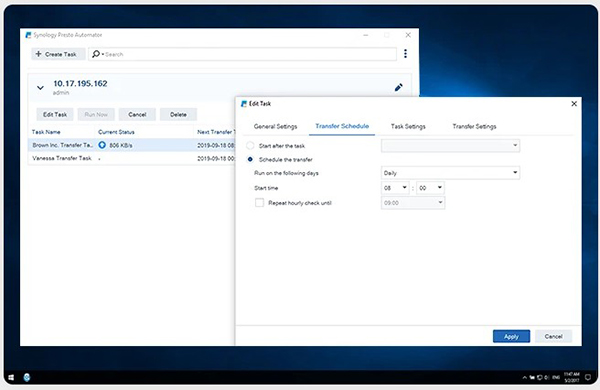
Tự động chuyển tốc độ cao theo nhu cầu của bạn với hỗ trợ giao diện dòng lệnh và công cụ máy tính để bàn Synology Presto Automator.
Trải nghiệm chuyển tùy chỉnh
Sử dụng tập lệnh để tùy chỉnh cách bạn muốn truyền dữ liệu.
Nhiều cách để lên lịch
Lên lịch các tác vụ sẽ được chuyển giao hoặc kích hoạt chúng bằng các sự kiện.
Giám sát và quản lý tập trung
Dễ dàng giám sát việc sử dụng và truyền băng thông trong thời gian thực với Presto File Server.
Tình trạng giao thông thời gian thực
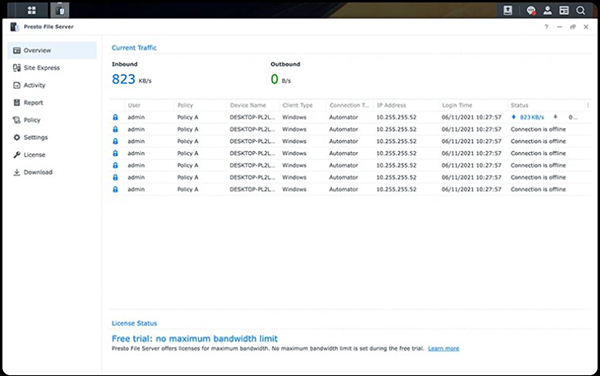
Presto File Server trên DSM cung cấp một bảng điều khiển trực quan để theo dõi các máy chủ và máy khách được kết nối, cũng như chất lượng truyền tải hiện tại.
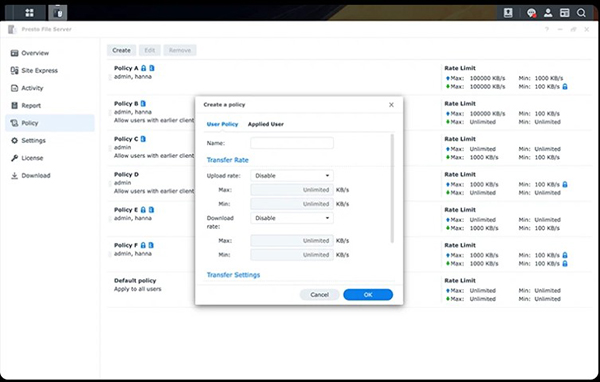
Quản lý chính sách chuyển nhượng tập trung
Tạo chính sách truy cập và chuyển giao tập trung và áp dụng chúng trong thời gian gần như thời gian thực.
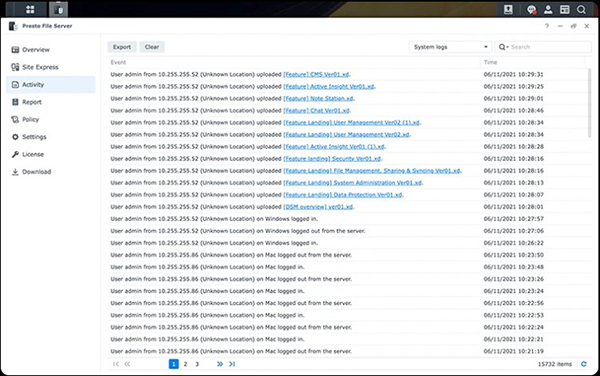
Nhật ký hoạt động chi tiết
Nhật ký hoạt động chi tiết gồm lịch sử hoạt động upload và download, bản ghi lưu lượng truy cập và số lượng tệp, hỗ trợ quản trị viên xác định các sự cố truyền có thể xảy ra và quản lý cài đặt băng thông.
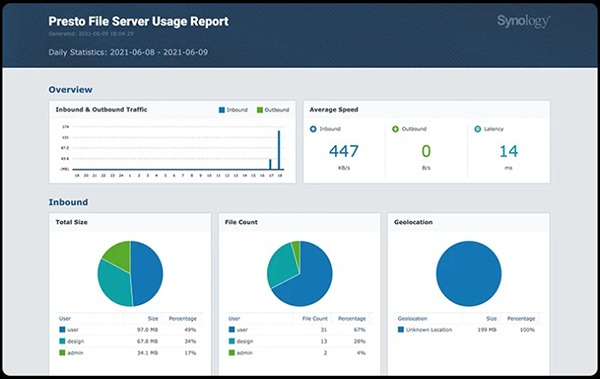
Tạo báo cáo theo lịch trình
Quản trị viên có thể dễ dàng xuất báo cáo hàng ngày, hàng tuần, hàng tháng và hàng năm trên Presto File Server và gửi chúng đến các địa chỉ email được chỉ định theo lịch trình đã đặt.
Sản phẩm NAS Synology gợi ý:
Thiết bị lưu trữ NAS Synology DS920+
NAS 4 khay ổ đĩa max 9 ổ đĩa
4 GB DDR3L non-ECC up to 8 GB
2 RJ-45 1GbE, 2 USB 3.0
Bảo hành 36 tháng
Xem thêm Thiết bị lưu trữ NAS Synology DS923+
NAS 4 khay ổ đĩa max 9 ổ đĩa
4GB DDR4 ECC up to 32GB
2 x RJ-45 1GbE
Bảo hành 36 tháng
Xem thêm Thiết bị lưu trữ NAS Synology DS1522+
NAS 5 khay ổ đĩa max 15 ổ đĩa
8 GB DDR4 ECC up to 32 GB
4 RJ-45 1GbE
Bảo hành 36 tháng
Xem thêm Thiết bị lưu trữ NAS Synology DS2422+
NAS 12 khay ổ đĩa max 24 ổ đĩa
4 GB DDR4 ECC up to 32 GB
4 x RJ-45 1GbE
Bảo hành 36 tháng
Xem thêm
Liên hệ Vietcorp để tìm hiểu thêm về Surveillance trên NAS Synology:
(024)7301 8899 – 08 3310 8899 Mr Toản
(028)7301 8899 – 08 1701 8899 Ms Thảo
(0236)730 8899 – 08 3490 8899 Ms Thúy
www.vietcorp.com 0814 247 247